
Trend Report: Thai Restaurants Are Getting Hot
Just over a decade ago, Aussie chef David Thompson moved his influential restaurant Nahm from Belgravia to Bangkok. In the space he left behind, some cooler, more casual places like Smoking Goat (in Soho and then Shoreditch), Som Saa (Spitalfields) and The Begging Bowl (Peckham) emerged to show the capital what Thai BBQ and street food could be.
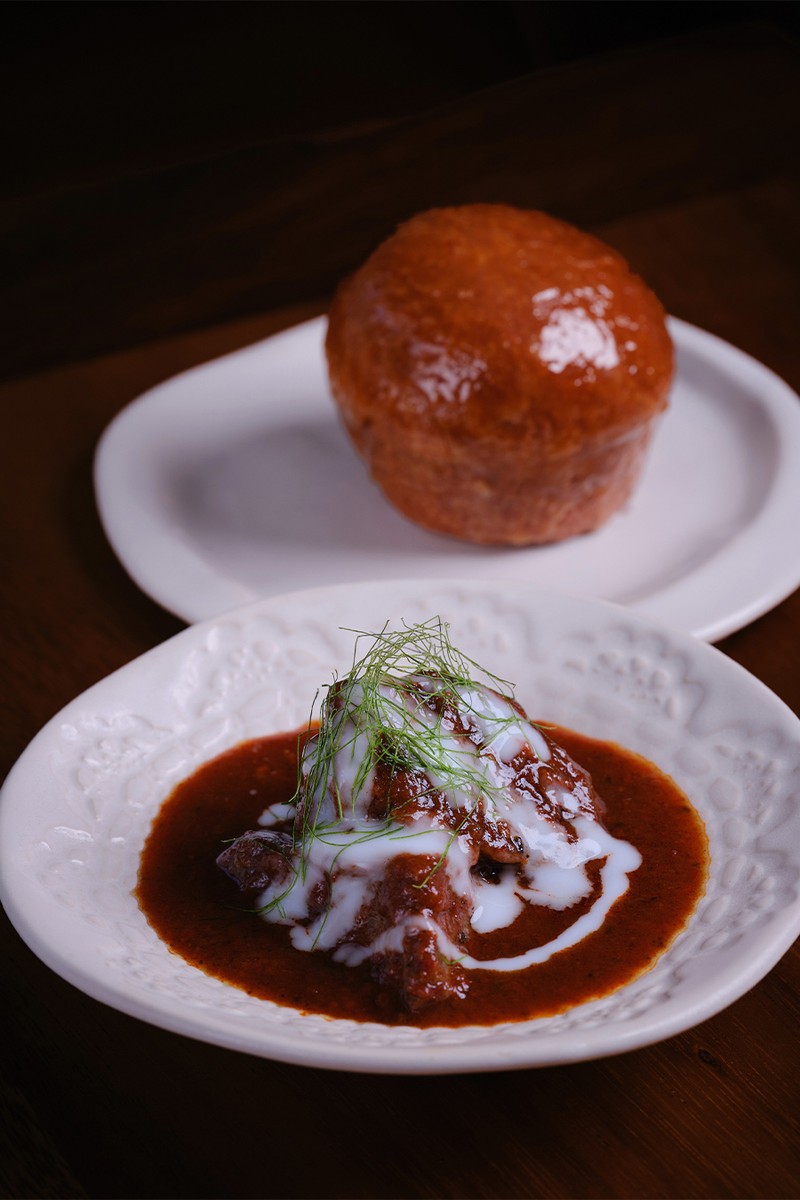
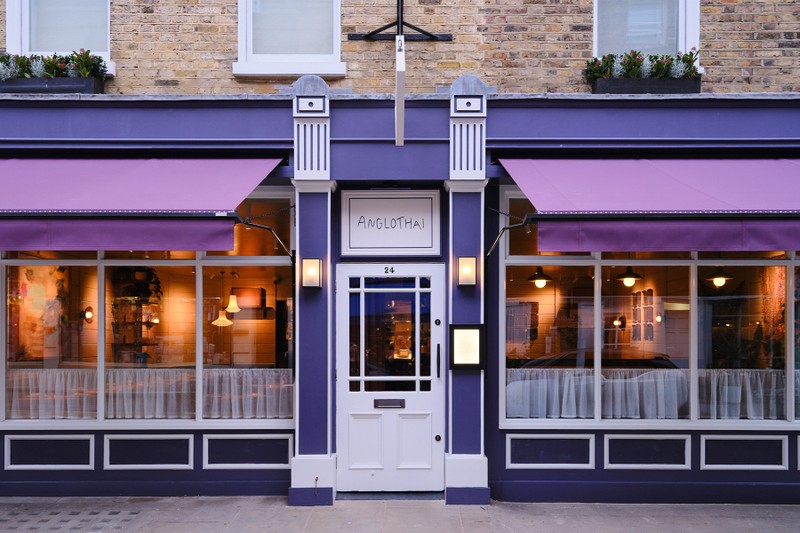
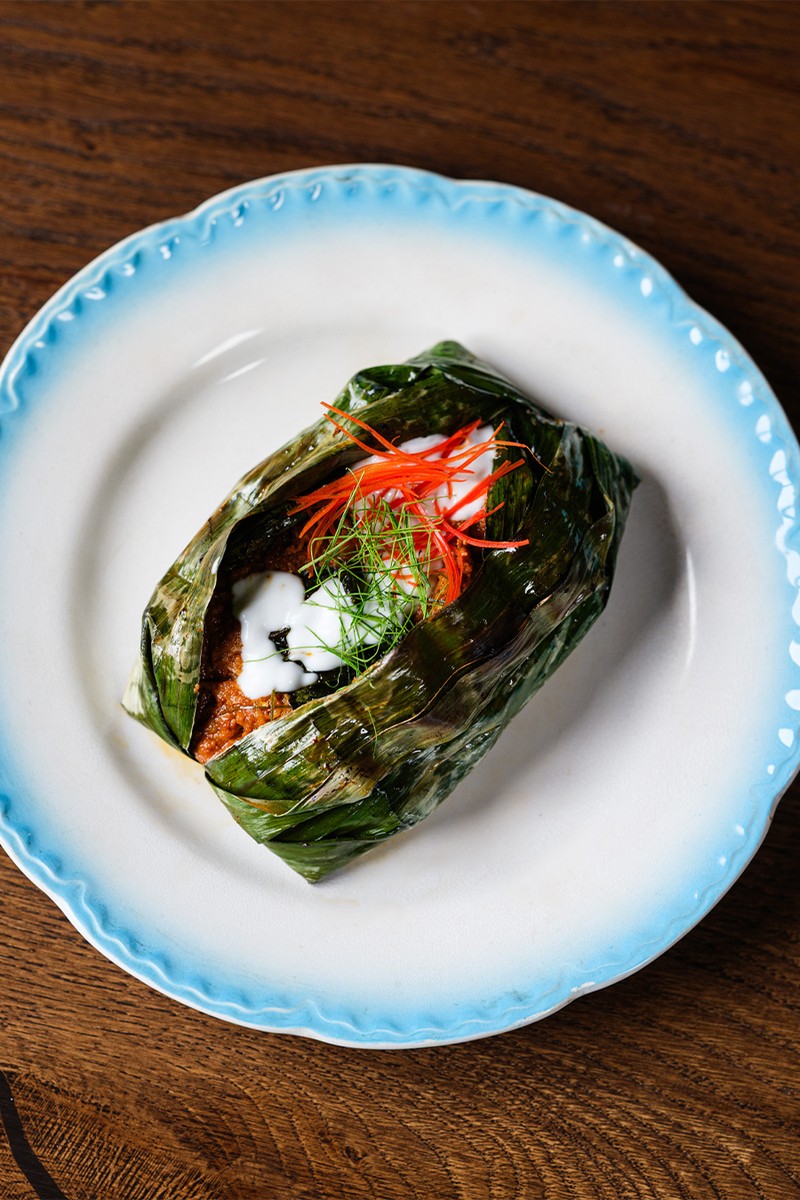
Fast forward to the 2025 Michelin awards: John and Desiree Chantarasak’s AngloThai wins a star just three months after opening in Marylebone. John is quick to credit Nahm and those that followed for the rise in high-quality Thai restaurants that have opened in London recently. “Smoking Goat and The Begging Bowl ignited the next stage in Thai restaurants – such as Singburi, Kiln and Farang, which all put their modern Thai ethos into the food they cook,” he says. “Now with the likes of Plaza Khao Gaeng and Speedboat Bar opening, the Thai food scene is getting better and better. I don’t think AngloThai could have existed in its current form without the work done by these restaurants to expand the public’s perception and outlook on Thai cooking.”
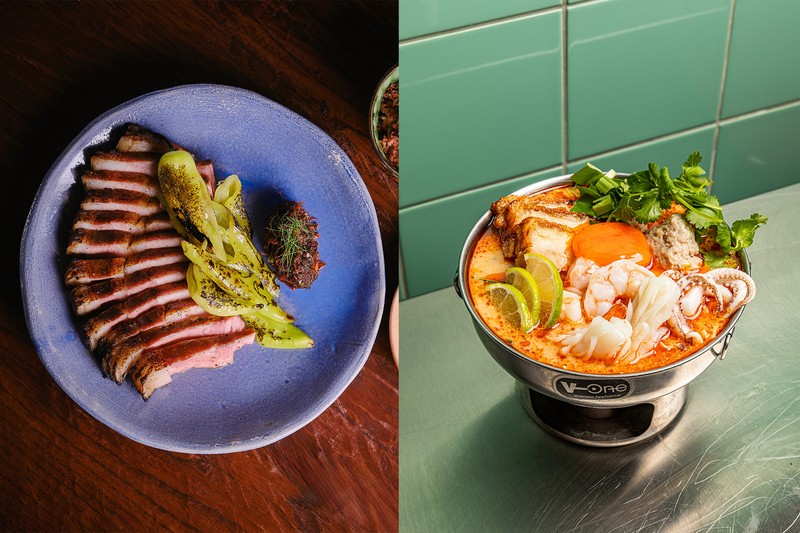
Led by husband-and-wife duo chef Win Srinavakool and Por Haruethai Noicharoen, the team at Khao-So-i must agree. One of Chiang Mai’s most beloved restaurants, its first international outpost landed in London just before Christmas. As Win explains, they chose London because it’s “one of the most international food cities, with diners who are curious, open-minded, and appreciative of regional cuisines”. KSI’s menu spotlights generations-old recipes, including the signature khao soi, a rich coconut curry noodle soup layered with homemade paste, crispy noodles and aromatic spices – served on an extravagant tray for a princely starting sum of £19.50. Meanwhile, small plates such as sai oua (northern Thai sausage), larb dib (raw, spicy beef salad) and moo ping (Norfolk pork belly with egg yolk) lean on the right side of heat (we mean hot), making the bar’s playful cocktails all the more tempting – imagine a Lanna Old Fashioned with coconut milk, peanut butter and refreshing coconut sherbet.
Luke Farrell’s doesn’t shy away from heat either. At Speedboat Bar in Soho and at his two fun and casual Plaza Khao Gaeng sites (Borough and – as of November – Tottenham Court Road) there are dishes that land their punches. “The standard of Thai food over here has really gone up – and so have the spice levels,” he tells us. “People here can actually eat Thai food now, rather than it being dumbed down for western palates.” Both his concepts are built around southern Thai dishes that blend coastal and jungle flavours rarely seen outside Thailand. Many ingredients are grown in Luke’s own Ryewater Nursery greenhouses, making this a hyper-local, hyper-flavourful take on Thai dining.
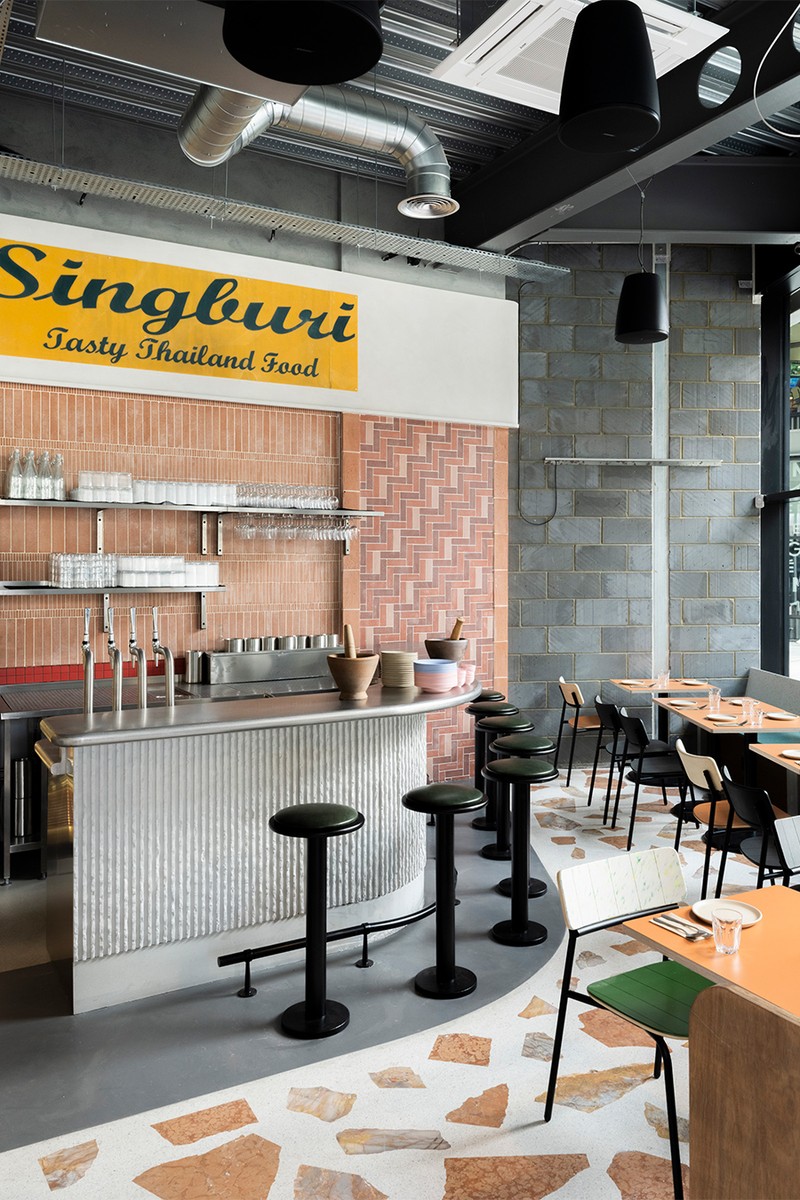
Over in Shoreditch, Singburi arrived from Leytonstone last summer. Industrial accents, terrazzo flooring and a central open kitchen with 19 counter seats anchor its main room, where diners get a front-row view of live-fire Thai cooking. The menu echoes the blackboard specials at the much-loved old place in Leytonstone: look for the likes of dill and lemongrass pork sausage; wild ginger chicken thigh; mussels, tomato and sweet basil; and smoked pork belly and green peppercorn.
There’s more. This month sees Brighton export Khao Bird move from its Borough Market residency into a permanent Soho site. And Som Saa is back following a fire last May. As John says, “I believe we’re on the cusp of another very exciting decade for Thai food in London.”
/https%3A%2F%2Fslman.com%2Fsites%2Fslman%2Ffiles%2Farticles%2F2026%2F01%2Fsl-man-thai-dining-trend-report-som-saa-interiors-credit-eleonora-boscarelli-elybscphotography.jpg)
To find out more about what’s going on, we spoke to five key London restaurateurs and chefs about why Thai cuisine is such a rich source of inspiration…
Why do you love Thai food?
“Thai culture and the cuisine is a part of me. I’m half British and half Thai, spending much of my time in Thailand, cooking and eating the food. I’ve been brought up enjoying the bold, kaleidoscopic flavours of Thailand, and without those being in my daily life I would feel quite lost. It’s in my blood and I’m extremely happy and proud of that.” – John Chantarasak, AngloThai
“I live in Thailand so it's home for me, although I will say living in Thailand is very different from being Thai – it's taken 20 years to figure that out. The most important thing for me is that I shouldn't be able to tell the difference between what I eat in Thailand and what's on the menus at Speedboat Bar or Plaza. Right now, I’m particularly enjoying the historic cuisine of Phuket town, and the food of the deep south in Yala, Pattani and Narathiwat. There are ingredients like fermented beef, tiny sun-dried cockles and all manner of sour fruits that I’m excited to share with our guests in London this year.” – Luke Farrell, Speedboat Bar & Plaza Khao Gaeng
How is the Thai dining scene in London changing?
“The landscape has broadened immensely. When David Thompson’s Nahm closed in 2012, almost simultaneously, Jane Alty opened The Begging Bowl. In my opinion, Jane really led the charge. Hers was the first of the 'new wave', ambitious, independent and chef-led Thai restaurants. Before that, you had the high-end experience or the reliable stalwarts like the Heron, Thai 101 and Busaba, but that ambitious 'middle ground' was still uncharted territory. Today, that category is where the energy is, with an audience that is no longer looking for generic menus but seeking out regionality and depth.” – Mark Dobbie, Som Saa & Kolae
There seem to be more Thai openings than ever – why?
“I think there are three factors at play. First, we moved into a digital era where people could fall down wormholes of regional food culture, leading them to seek out uncharted territory. Second, there’s been a shift in how chefs view their careers. I’ve been in the industry for over 25 years, and when I started, the path was very much focused on learning European and French techniques. I did an apprenticeship in that world before I first tasted a jungle curry and realised I wanted to completely retrain. Today’s chefs feel they can explore diverse cuisines early on, seeing them as a valid and prestigious way to progress.
“Finally, and perhaps most importantly, the supply lines have evolved. When Nahm closed, it was partly because importation and traceability became a huge challenge. For a while, the ingredients just weren't there. When we and the Begging Bowl started, we had to seek out our own lines. We got lucky meeting our supplier, Tana, who has been integral to our operation. As importers like him have found ways to bring in high-quality produce – like proper palm sugars, makhwaen spices and dried soybean discs – it has allowed us to cook the cuisine in the most honest way we can. We use UK farms where we can for produce that can be interchanged without changing the dish, but having access to those specific, high-quality Thai ingredients has been a total game-changer for the scene.” – Mark
Nick, tell us about the ambition for the new Singburi site…
“We’ve taken an element of the old site – the blackboard menu where specials would be cooked each night – and built upon it. We now view the cooking as a test kitchen. Sometimes we play around with dishes that are only available for one service; others become firm favourites. But there is a heavy rotation. It makes it fun both for the diners and for the team. Also, the accessibility is much greater – you can book a table now!” – Nick Molyviatis, Singburi
/https%3A%2F%2Fslman.com%2Fsites%2Fslman%2Ffiles%2Farticles%2F2026%2F01%2Fsl-man-thai-dining-trend-report-anglo-thai-credit-charliemckayanglothai.jpg)
What’s the USP of KSI, Win?
“KSI is built around a very specific purpose: to introduce khao-so-i, the hidden gem of northern Thailand, to the world. We focus deeply on northern Thai cuisine rather than offering a broad or adapted interpretation of Thai food. Guests can see the flames, smell the spices, and feel the rhythm of the kitchen, just as they would in Chiang Mai.” – Win Srinavakool, Khao-So-i
Mark, how is Som Saa doing post-fire?
“The core of Som Saa remains exactly what our regulars have always loved, but the restaurant has definitely matured. After the fire, we underwent a comprehensive refit, and while the layout remains familiar, the space has been completely revitalised. It feels like the most finished version of the restaurant we’ve ever had. We’ve moved away from the more shabby-chic elements of our early days toward a more polished experience. It really feels like the restaurant has grown up with us. It still has that unmistakable buzz when it's full, but it’s a more refined and comfortable environment to spend an evening in now. We also have Kolae in Borough now. It has the same 'from scratch' philosophy, but while Som Saa is a broader exploration of the whole country, Kolae is a deep-dive into the diverse cuisines of the South, with the ‘kolae’ grilling technique at the core of the menu.” – Mark
What do you think has made AngloThai stand out, John?
“We work differently to other Thai restaurants in London because where they strive for authenticity, we find our authenticity in the bridging of the two sides of my heritage in the cooking. Essentially, we take heavy inspiration from the food of Thailand (my dad’s side of the family) but use a predominantly British larder of ingredients to cook with (my mum’s side of the family). It’s a different way to look at the cuisine – because of this we could probably be pitched as a modern British restaurant rather than a Thai restaurant due to the terroir of the ingredients we source and cook with.” – John
And Luke, how do Plaza Khao Gaeng and Speedboat Bar differ from one another?
“Plaza was London's first uniquely southern Thai restaurant, a cuisine that hadn't been explored or represented correctly before. I really didn't expect people to fall in love with it quite like me. I always say that Plaza is like Saturday lunch. It’s exacting southern Thai fare. If it was a publication, it would be some obscure botanical journal. Whereas Speedboat Bar is definitely Thai FHM, with all the flaming woks, beer towers and spicy seafood of a neon-soaked Friday night in Bangkok's Chinatown.” – Luke
Talk to us about the most popular dishes at your restaurants – it’s not just pad thai, right…
“The aubergine pad phet is very popular. Even people who don't like aubergine like it – they see it done in a different way, unexpected. And our crispy rice salad has an incredible texture, rice double cooked and served spicy and fresh, giving you all the elements of taste and texture in one mouthful.” – Nick
“Khao-so-i sits at the centre of what we do and represents the essence of Northern Thai cooking. The dish is built around two elements that matter most to us: the soup and the noodles. The broth is based on a treasured family recipe passed down for over 40 years, crafted with 32 spices to create a rich, creamy depth. Our noodles are freshly made in-house and refined through more than 1,000 trials, designed so the curry broth clings to each strand as it is lifted.” – Win
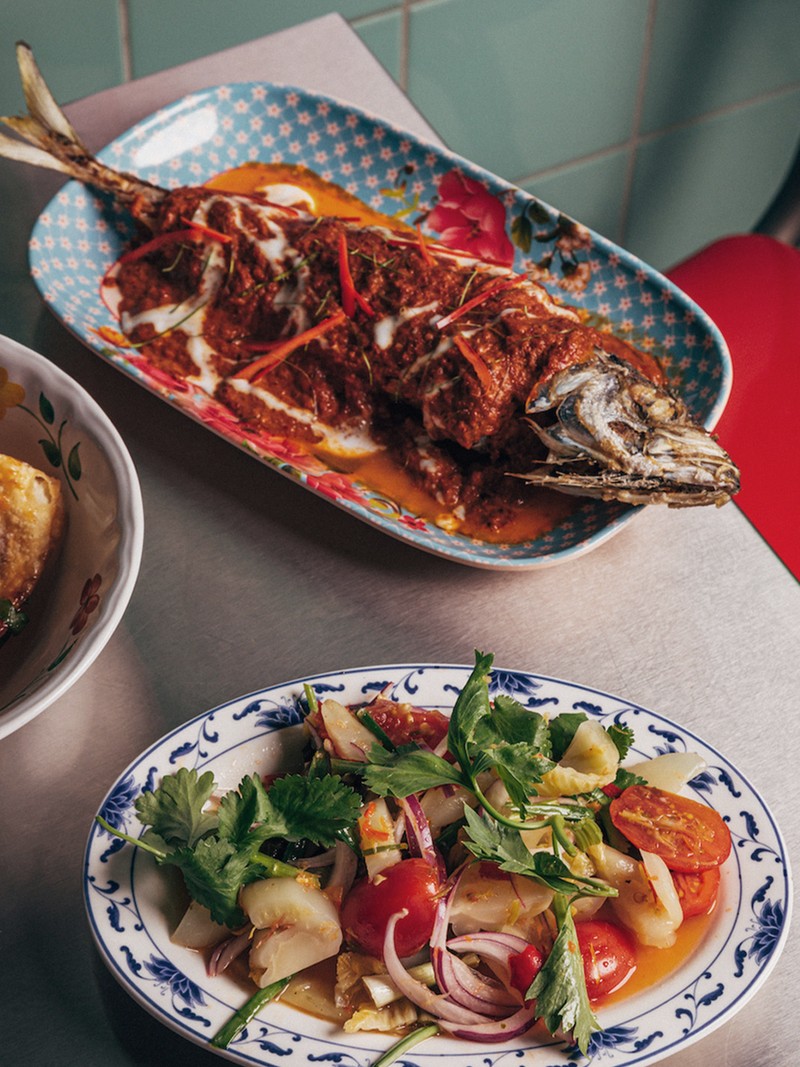
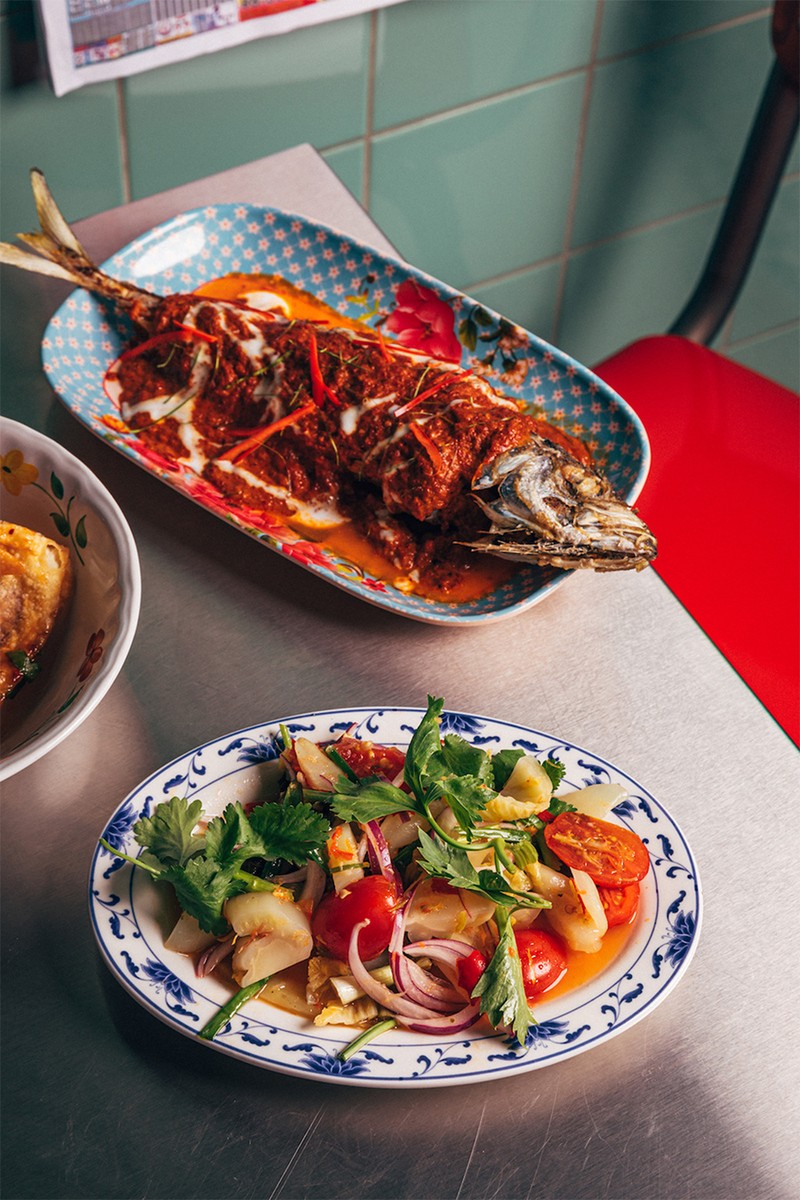
“We’re always evolving the menu with new seasonal plates, but classics like our Isaan-style deep-fried sea bass (nahm dtok pla thort) remain incredibly popular. I think dishes like this stay at the top of the list because they hit that specific high-definition profile people crave in Thai food. It’s about the intensity of the aromatics and that perfect, texturally exciting balance of crunch, fresh herbs and acidity. There’s a 'flavour explosion' that draws people into Thai cuisine, and we try to lean into that without pulling our punches. Whether it’s a long-standing favourite or one of our newer bar snacks, like the pickled mango with fried shrimp paste relish, diners really respond to that uncompromising depth of flavour. They are looking for dishes that are vibrant, punchy and have a real sense of place.” – Mark
Finally then, have diners become more adventurous when it comes to trying different levels of heat?
“Definitely. There’s been a massive shift from people being cautious of 'funk' or heat to people specifically seeking it out. A decade ago, ingredients like shrimp paste, fermented fish or very bitter herbs might have been seen as challenging, but today’s audience is much more engaged. I think the London diner now trusts us. They understand that we aren't using spice for the sake of it, and some of these more intense flavours can become moreish if they are balanced and used correctly.” – Mark
DISCLAIMER: We endeavour to always credit the correct original source of every image we use. If you think a credit may be incorrect, please contact us at [email protected].
/https%3A%2F%2Fslman.com%2Fsites%2Fslman%2Ffiles%2Fwebsite-images%2F2026%2F10%2Fslman-full-bleed-reversed.jpg)
