

Why You Should Go Salmon Fishing In Scotland
For about as long as there have been people in Scotland, there has been salmon fishing on the river Tay. On the opening day of the new season, SLMan went to the country’s most celebrated hotel to find out how this prehistoric activity still casts a spell…
All products on this page have been selected by our editorial team, however we may make commission on some products.
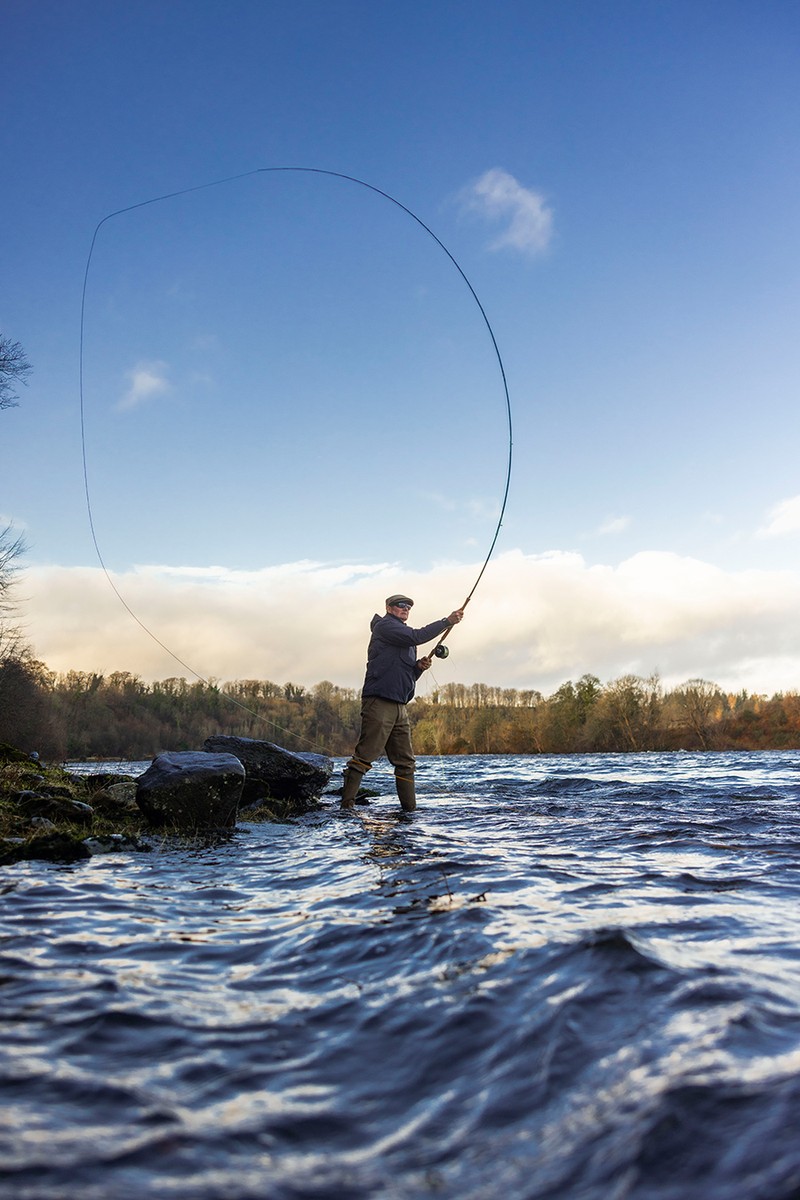
There are lots of good books about fishing. But there’s only one film anyone knows – Robert Redford’s A River Runs Through It – and it’s based on one of those books. Perhaps this is because everything happens below the surface in fishing. The movements of the fish are beyond the reach of the camera lens, and so is the fisherman’s state of mind.
That state of mind is what the writers try hardest to capture. For Norman MacLean, who wrote A River Runs Through It in 1976, “One great thing about fly fishing is that after a while nothing exists of the world but thoughts about fly fishing.” Half a century later, with the world deep in its smartphone era, it’s a line that still ripples, and that probably explains the rising interest in events like this one: the opening of salmon fishing season on the river Tay.
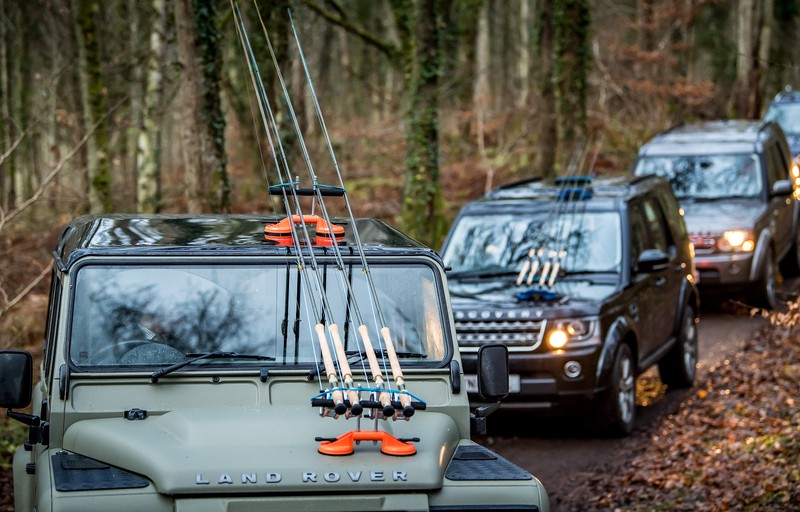
Natural, mindful and experiential, a day’s fishing with the ghillies of Gleneagles is the embodiment of quiet luxury. It begins, though, with a bacon roll. The fire is lit in the hotel’s wood-lined Shooting Lodge, the coffee’s good, and it’s starting to rain outside, but nobody’s hanging around. It’s been exactly three months since anyone fished for salmon on the Tay, and a fleet of Defenders is ready to take us back there.
For about 10,000 years, Atlantic salmon have been travelling thousands of miles from their oceanic feeding grounds to spawn here, back in the river where they were spawned themselves. Humans have been trying to catch them for most of those 10,000 years, first for food, then for commerce, now for sport.
The fish everyone is hoping for today is a springer – a bright, shiny, energetic salmon that has just entered the river at the peak of its powers. The consolation would be a kelt – the spent-force version meandering back to sea after spawning.
For a tangle of reasons, salmon numbers on the Tay are way down on where they were a century ago, when Georgina Ballantine caught a British-record 64-pounder. To land a springer on opening day would be gloriously rare, an achievement to light up the fishing Facebook groups where such news is broken.
Our stretch of river is called Benchil and has its own beat manager, Bob, who has laid on a bagpiper for opening day. Bob himself reads a poem – an ode to wild salmon – before a ceremonial first cast by Jonny from the Atlantic Salmon Trust. Then it’s our turn.
/https%3A%2F%2Fslman.com%2Fsites%2Fslman%2Ffiles%2Farticles%2F2026%2F03%2Fsl-man-110326fly-fishinggleneagles-1.jpg)
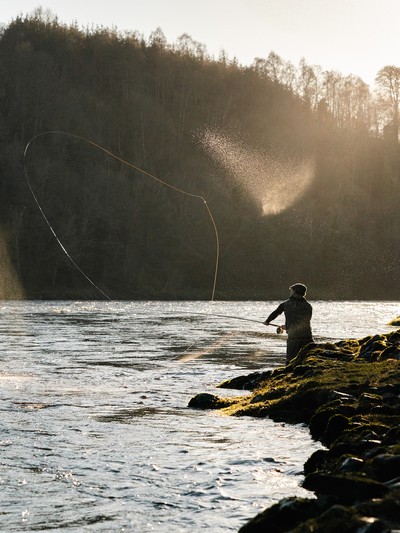
Benchil is beautiful. The Tay is wide and curving. The tall trees on the opposite bank hide ospreys and herons. Sometimes you can see otters in their shadow. Today, though, the river’s up and fast moving. It’s too fast for fly fishing (or at least novice fly fishing) which means spinning instead. The technique is simpler, but true skill remains hard won. The water still has to be read for clues about where the fish might be, and the line still has to go to that place.
After a few practice casts, we’re sent to a pool called Long Shot, which we don’t take personally. For the next four hours, through brightening, darkening and eventually blue skies, we flick the line out and reel it in. The ghillies, who must all wait until the weekend for their own seasonal debuts, are endlessly patient, and generous with their local knowledge, pointing us towards their own favourite spots on the beat.
Slowly, we slip towards that liminal state we’ve read about. Fishing is all that matters. It takes all of our concentration, and leaves us with silence. Somewhere in the background, there’s a hope the silence will be broken by a pull on the line. It doesn’t happen for us, even with the ghillies on side, but we return to the log cabin on the bank above us inordinately relaxed about our failure.
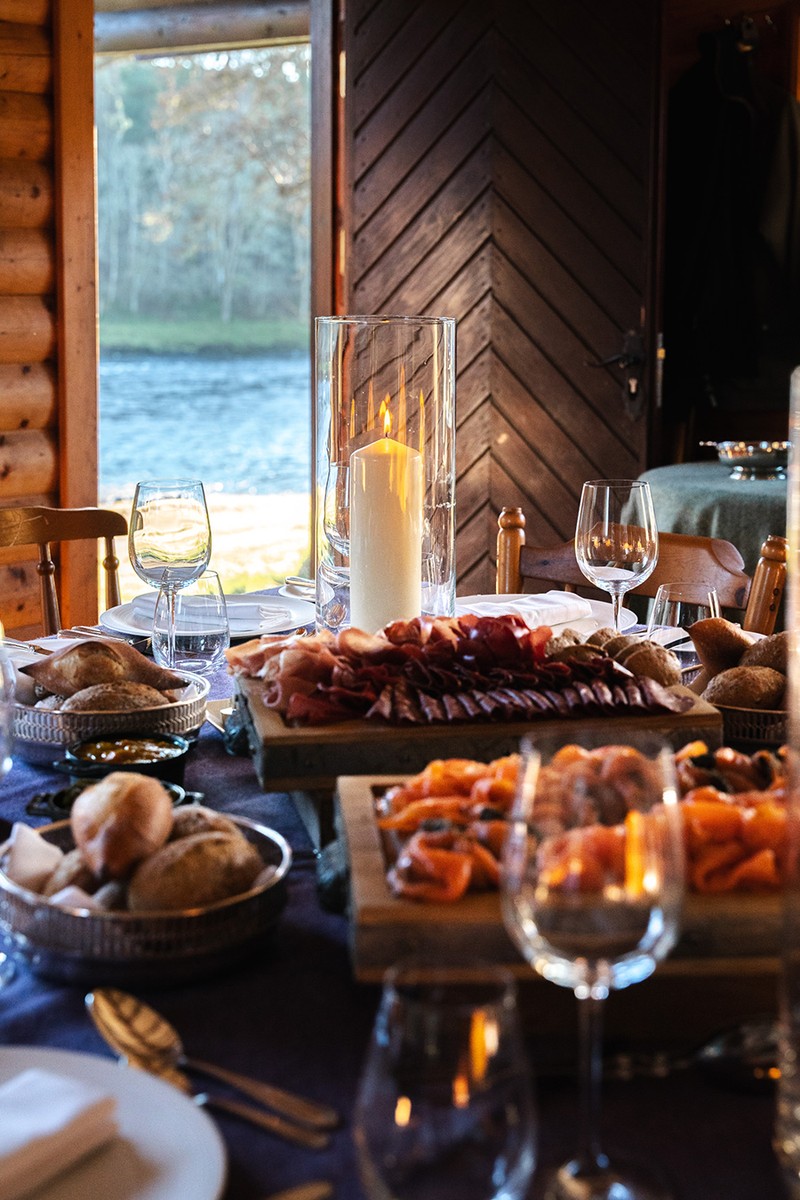
The cabin has a wood burner and enough of a kitchen for our host Annie to conjure a proper lunch. The conversation begins over charcuterie and smoked salmon (someone had better luck than us). Among the ten of us around the table, two have something to report. Fergus landed a handsome brown trout. Johnny, who grew up spinning for pike, caught a trout and three kelts. From further along the river, there are stories of Scotland football manager Steve Clarke showing up for opening day, but nothing about any springers. “Spin it to win it,” says Johnny, and none of the fly fishermen can raise much of an argument.
One of the trout might make it onto the vintage wooden scoreboard in the main reception of Gleneagles, where the catch of the day is recorded alongside other outdoorsy achievements like the day’s high score in field archery and the number of clays hit in the Royal Shooting Challenge.
Tucked a couple of corners deeper into the hotel is its American bar. Its elegant surrounds, assured staff and consummate cocktails make it exactly the place to extend the afterglow of a day’s fishing into the night. The next morning, we fly back to London. Coming into City airport above the Thames, wondering how the ghillies would read its water, we feel a pull.
A day’s wild Atlantic salmon fishing with the Gleneagles ghillies costs £925, including equipment, transport, lunch and bacon rolls. Visit Gleneagles.com for more.
All products on this page have been selected by our editorial team, however we may make commission on some products.
DISCLAIMER: We endeavour to always credit the correct original source of every image we use. If you think a credit may be incorrect, please contact us at [email protected].
/https%3A%2F%2Fslman.com%2Fsites%2Fslman%2Ffiles%2Fwebsite-images%2F2026%2F10%2Fslman-full-bleed-reversed.jpg)
